What Masi carried through her treatment
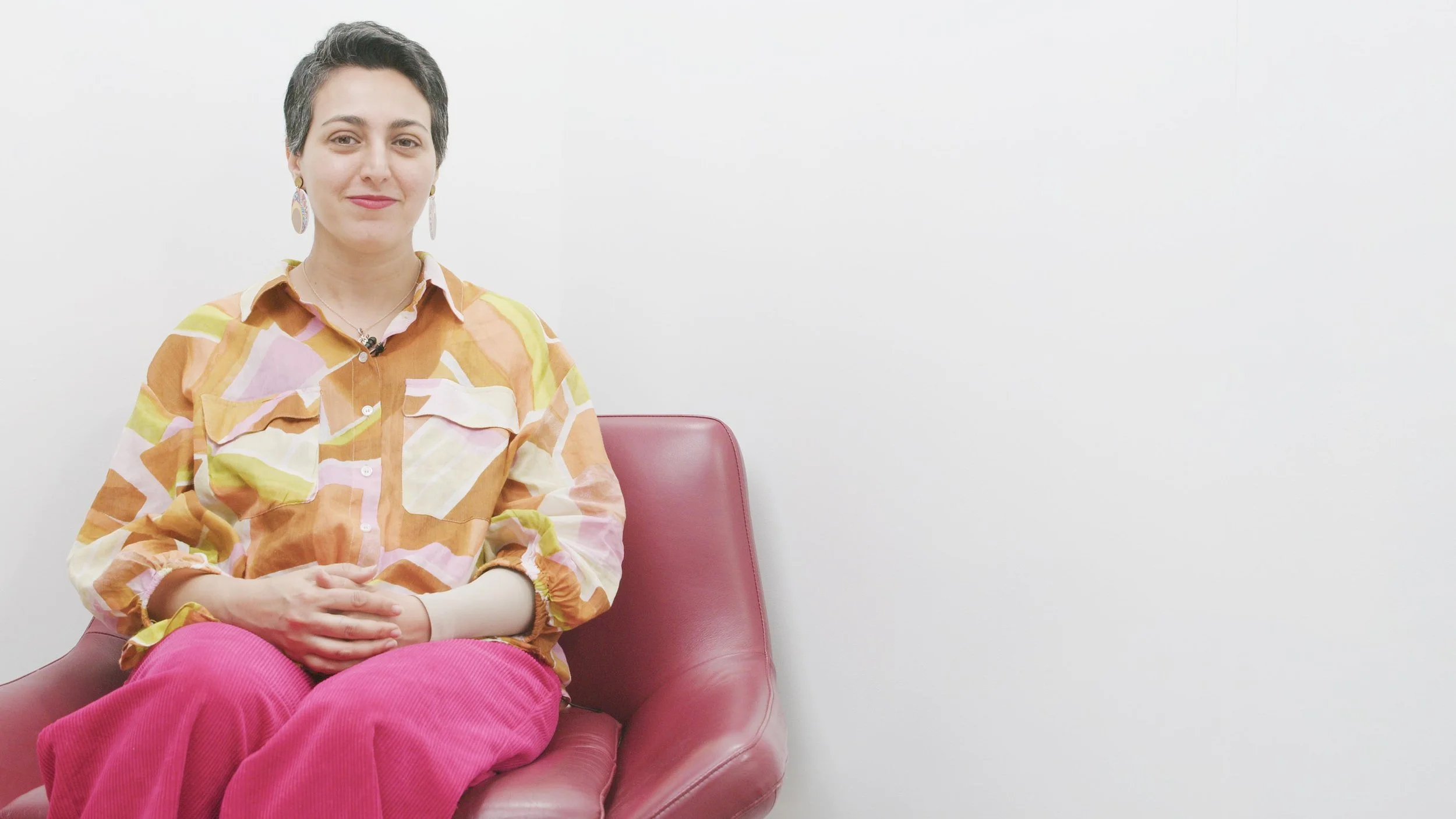
“The nurse came in and said, oh my God, I love your dress.
I totally forgot what was happening. She changed everything.”
A quiet conversation with a Persian speaking woman, in the middle of breast cancer, about the language of care.
She is still in the middle of it. Two surgeries to go. The hard parts, she says, are behind her now, but you can feel that the year and a half is still close to the surface.
We sat down together, two people from the same country, living in the same city, talking in a language that is not the one she grew up with. And we spoke about that gap. The gap between hearing care, and feeling it.
This is not a guide. It is not a list of takeaways. It is one woman, telling the truth about what it felt like to be a patient.
The Language of illness
The first day, you are not yourself
Masi was newly diagnosed when the appointments began. Test after test. Words she had never heard. A husband beside her in every room, holding the names she could not.
You are scared. You are not yourself. And at the same time, you have to deal with all of these new things, and they are all in another language.
She did not need more pamphlets. She needed time. A little context. Something to hold before she walked into a room full of new words.
Hearing it in your own language is different
Masi had an Iranian GP and an Iranian specialist. Her oncologist was not Persian. So she found a way around it. Her sister searched for an Iranian professor who was also an oncologist, and Masi booked an appointment, just to hear it in Farsi.
When you hear everything in the words you grew up with, you make sure nothing is missing. That is the quiet thing this episode is about. Not translation. Recognitio
YouTube, late at night
When the day was over and the appointments were done, Masi went home, opened her laptop, and watched. Other patients. Other women. Other rooms in other countries. The good ones gave her a future to look at. They told her, gently, what came next.
"After watching them, I felt a lot better. I was like, okay, they've done it. I can do it too."
Masi G.
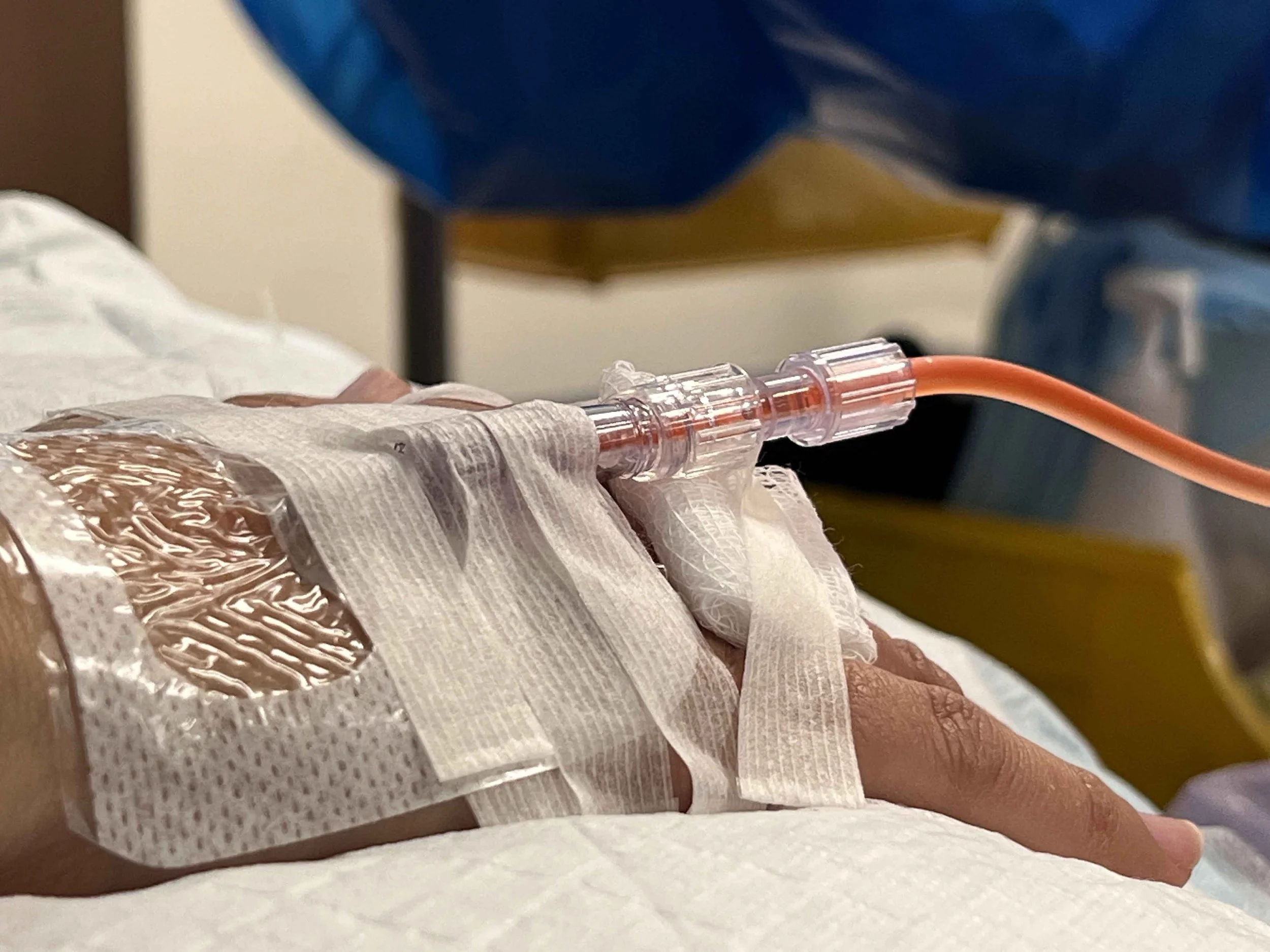
Masi during her chemotherapy session, accompanied by Amir.
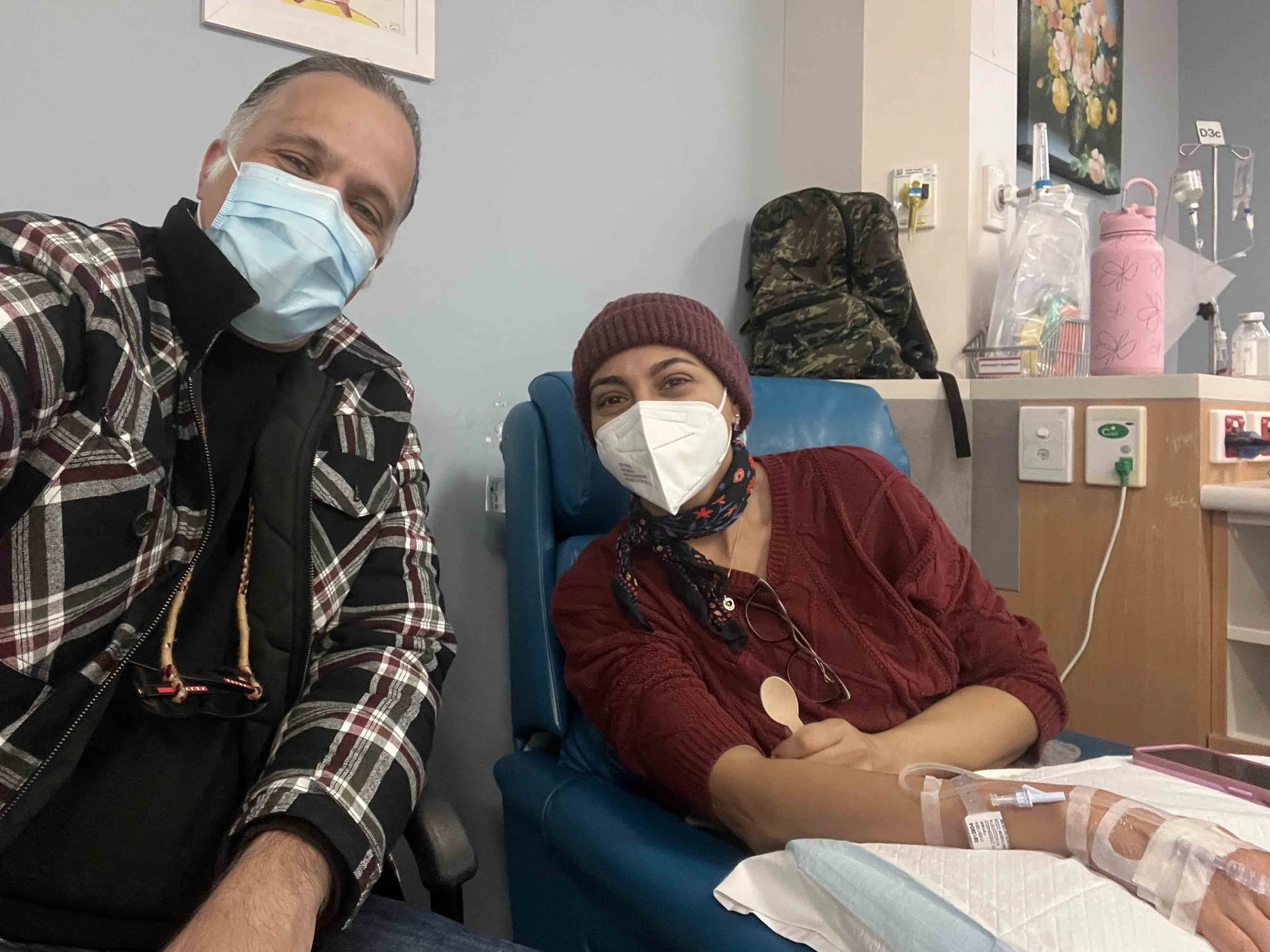
Amir and Masi during one of Masi’s chemotherapy sessions.
The Moments That Stayed
The receptionist, and the nurse
There were hard moments Masi did not expect. Not the surgeries. Not the chemo. The small ones.
She had been crying in the car. The person behind the counter was impatient, unaware of, or unmoved by, what she was carrying. And then, minutes later, a nurse walked in and said: oh my God, I love your dress. Masi forgot, just for a moment, where she was and why.
A dress. Fifteen minutes. A whole day rewritten.
The friends who showed up
Masi shared her diagnosis with her closest friends early on. They built a roster, who was driving on which day, who was cooking, who was walking her around the block when she did not want to leave the house.
There is one friend in particular she could not name without her voice softening. "I just cannot say thank you. It's not enough."
A message, to anyone listening
“If you understand what a patient is going through, even a smile can make a difference. We are not just someone coming and going.”
Masi G.
Key Takeaway
Masi is still in her process. Two surgeries to go. But she sat down, in front of a camera, in a language that is still not entirely hers, and she told her story so that one other person, somewhere, might feel a little less alone.
If you understand what a patient is going through, even a smile can make a difference. We are not just someone coming and going.
Healthcare communication that reaches people, really reaches them, does not simply inform. It recognises. It meets people in the language they carry, at the moment they need it most. That is what Masi's story shows us. And that is why patient stories, told honestly and with care, matter more than any brochure.
"Even if this conversation helps one person, I'm grateful."
So are we.